
AI Based ERP System: How Automation Is Transforming Mid-Size Businesses
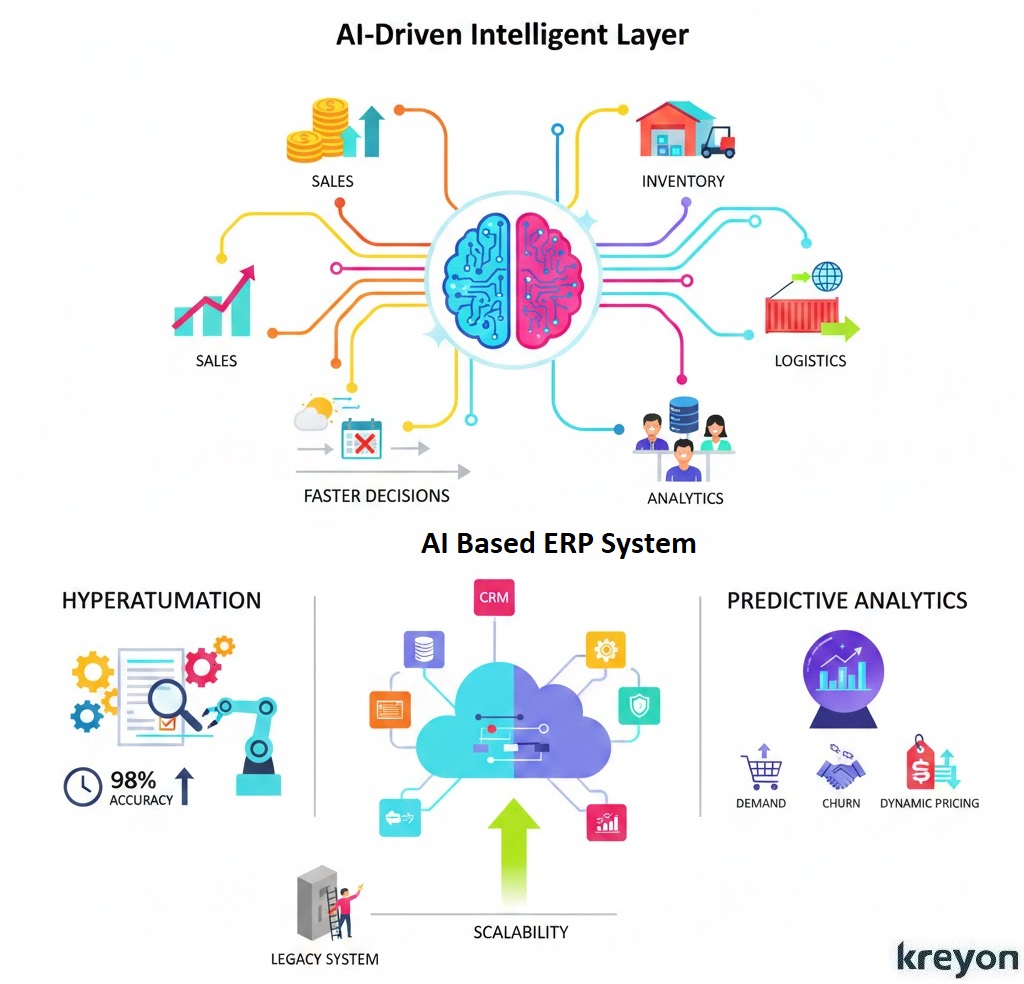
Mid-size businesses are at a fascinating crossroads. They’re too complex for spreadsheets and disconnected software, yet not large enough to tolerate inefficiency at scale. That’s where an AI Based ERP System comes as a tool that’s quietly reshaping how these companies operate, compete, and grow.
For decades, ERP systems focused on integration, connecting finance, operations, HR, and supply chains under one digital roof. Today, artificial intelligence is taking this promise further.
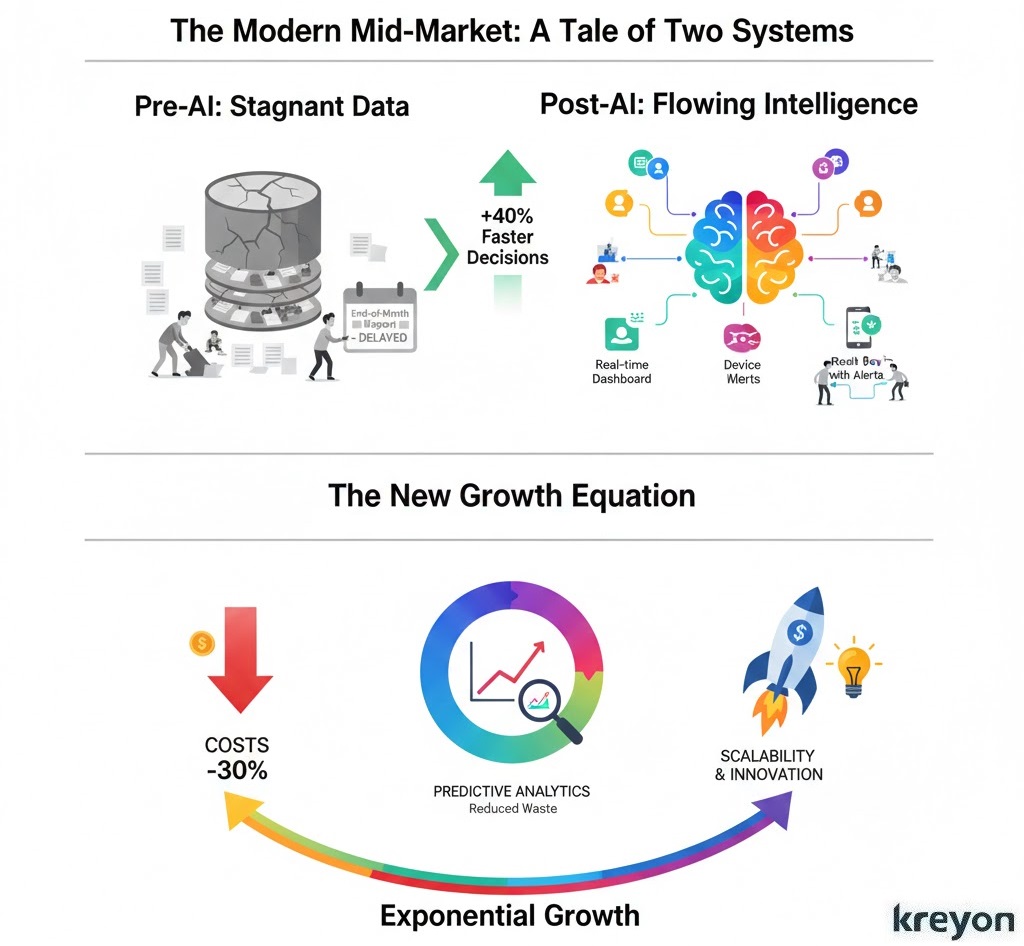
Automation isn’t just about saving time anymore; it’s about bringing intelligence into every decision. For mid-size companies, this shift can be the difference between stagnation and exponential growth.
What Is an AI Based ERP System?
Think of an AI Based ERP System as your traditional ERP, but smarter. It still manages core functions like finance, procurement, manufacturing, inventory, and CRM. What sets it apart is its ability to learn, predict, and automate decisions with AI capabilities, including:
-
Machine learning for trend detection and pattern recognition
-
Predictive analytics for forecasting and risk management
-
Natural language processing for intuitive reporting
-
Intelligent automation to reduce manual intervention
-
Anomaly detection to prevent errors before they occur
Instead of merely tracking inventory, an AI-powered ERP predicts stockouts before they happen. Instead of generating static financial reports, it highlights unusual spending patterns in real time.
Unlike traditional giants where AI often feels like a “bolt-on” feature, Kreyon’s AI-driven ERP is architected for real-time cognitive processing. It doesn’t just store data; it understands it.
Why Mid-Size Businesses Can’t Afford to Wait
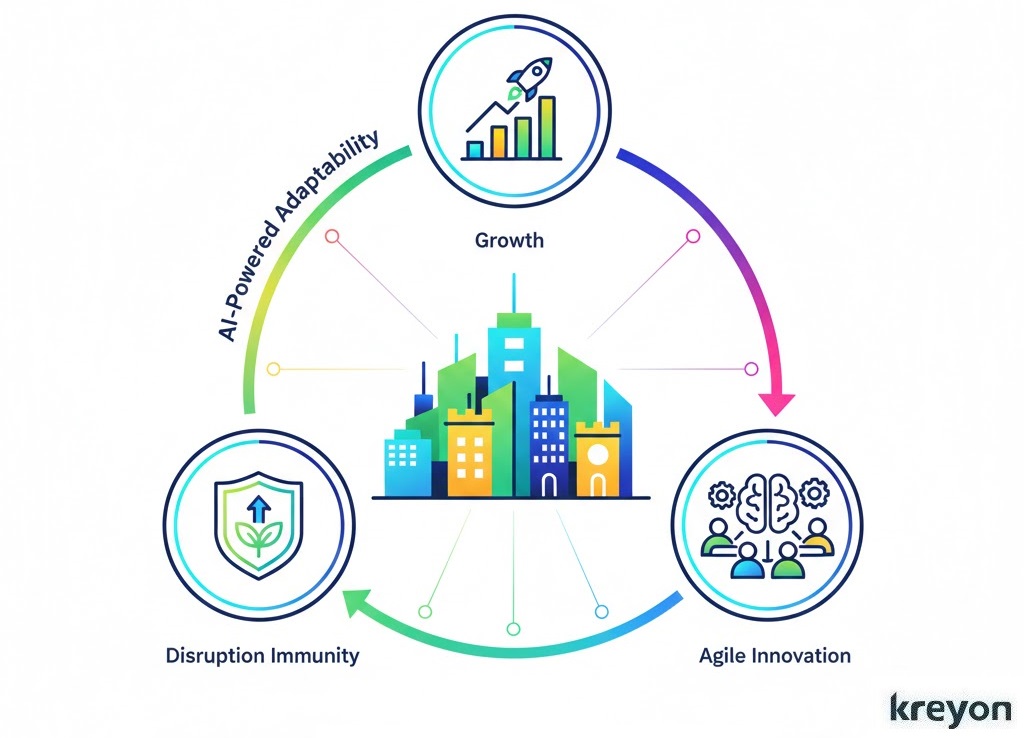
Large enterprises have long benefited from data science teams and advanced analytics. Mid-size companies often juggle lean teams with limited technical resources. An AI-based ERP system levels the playing field by helping businesses do more with less.
1. Managing Complexity
Mid-size businesses often operate across multiple locations, product lines, and markets. Supply chains are growing more complex, compliance requirements are increasing, and operational data is exploding. Without automation, managing this complexity can quickly become overwhelming.
2. Filling Talent Gaps
AI acts like an invisible teammate. It assists finance teams with forecasting, operations managers with predictive maintenance, and procurement teams with smarter demand planning. Essentially, it gives your teams superpowers.
3. Turning Data Into Decisions
Most mid-size businesses already generate mountains of data. The challenge isn’t collection, it’s interpretation. AI-driven ERP systems transform raw data into actionable insights, enabling leadership to make smarter, faster decisions.
According to McKinsey & Company, AI-powered automation can improve operational productivity by up to 40%, a transformative advantage for mid-size organizations.
Core Functions Automated by AI ERP
AI doesn’t just speed up workflows; it fundamentally changes how mid-size businesses operate. Here’s a closer look at the key areas impacted.
Finance: From Reactive to Predictive
Traditional ERP automates bookkeeping. AI-based ERP goes further. Features include:
-
Automated expense categorization
-
Real-time cash flow forecasts
-
Fraud detection through anomaly recognition
-
Predictive budgeting and risk modeling
This means CFOs spend less time chasing numbers and more time making strategic decisions.
Supply Chain: Smarter, Not Harder
AI analyzes historical sales data, seasonality, supplier performance, and external market factors to optimize procurement. Automation capabilities include:
-
Intelligent demand forecasting
-
Smart reorder point adjustments
-
Vendor performance scoring
-
Alerts for supply chain disruptions
Gartner reports that AI-enhanced supply chains can reduce forecasting errors by up to 50%, cutting costs and improving service levels for mid-size manufacturers and distributors.
Manufacturing: Downtime Becomes Optional
Manufacturing-focused mid-size firms see dramatic benefits from AI integration. ERP systems can:
-
Predict maintenance needs using sensor data
-
Optimize production schedules in real time
-
Detect quality issues automatically
-
Forecast capacity and resource requirements
The result? Reduced downtime, smoother production, and higher margins.
Human Resources: Intelligent Workforce Management
AI helps HR teams move from admin-heavy tasks to strategic insights:
-
Automated candidate screening
-
Workforce analytics for performance and engagement
-
Predictive attrition analysis
-
Personalized training and development recommendations
HR leaders can now make data-backed decisions that improve both productivity and retention.
Strategic Advantages of AI ERP for Mid-Size Companies
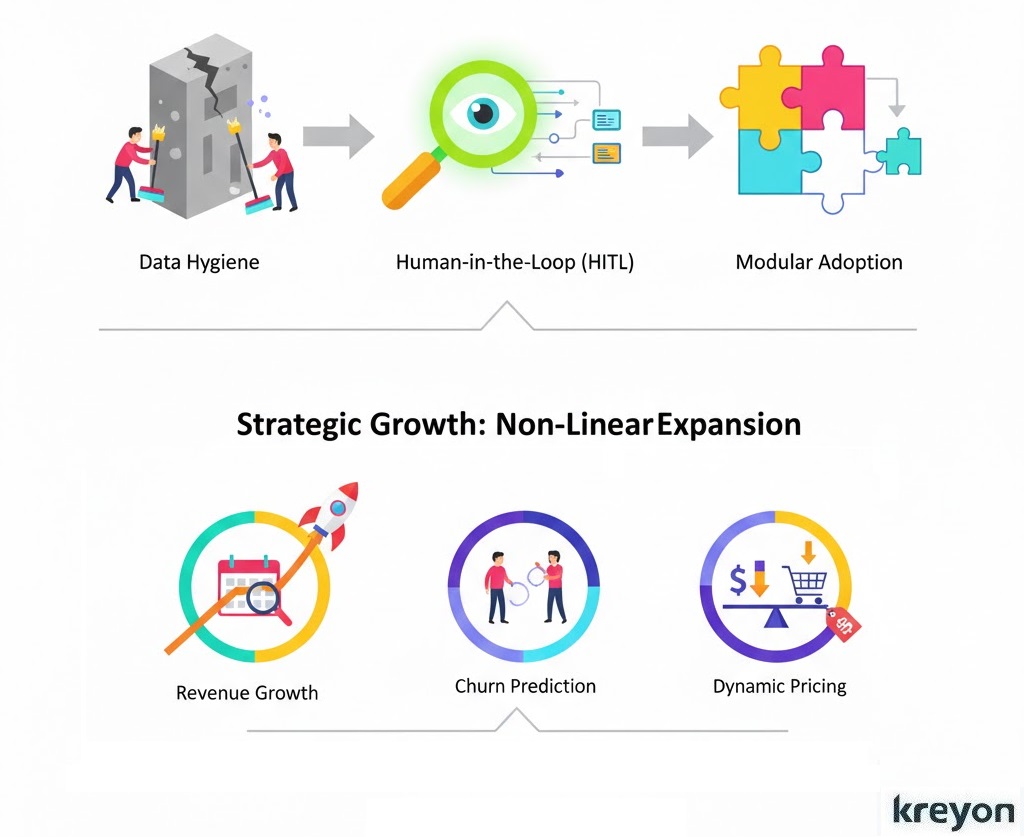
Beyond efficiency, AI ERP offers strategic benefits that can redefine growth trajectories:
-
Faster, smarter decisions – AI surfaces trends automatically, freeing leadership to focus on strategy.
-
Scalability without proportional headcount – Automation allows growth without ballooning administrative teams.
-
Competitive differentiation – Operate with enterprise-grade intelligence while staying agile.
-
Continuous learning systems – AI improves over time, becoming smarter as it adapts to business patterns.
Making AI ERP Work: Best Practices
Implementing AI ERP is more than a tech upgrade, it’s a business transformation.
-
Start with clean data – Ensure data governance and integration are solid.
-
Prioritize high-impact areas – Focus on functions where predictive insights offer measurable ROI, like demand forecasting or cash flow optimization.
-
Align leadership and culture – Introduce change gradually, communicate transparently, and upskill teams to embrace AI.
Risks and Realities
AI ERP isn’t magic. Companies should be aware of:
-
Over-automation – Human oversight is still essential.
-
Cybersecurity concerns – More automation can expand attack surfaces.
-
ROI expectations – AI improves decision-making, but results depend on proper implementation and organizational readiness.
The Future of AI-Based ERP
The next generation of AI ERP will likely include:
-
Conversational interfaces powered by natural language
-
Autonomous decision loops for procurement and replenishment
-
Hyper-personalized dashboards by role
-
Embedded generative AI for reporting and forecasting
Organizations like World Economic Forum predict AI will reshape operations across industries in the coming decade. Mid-size companies adopting AI-driven ERP early will be positioned not just to survive but to lead.
Conclusion
ERP is no longer just about recording transactions, it’s about guiding decisions. The AI Based ERP System transforms data into foresight, automates routine tasks, and empowers mid-size companies to scale smarter and faster.
If your organization is evaluating AI-driven ERP, start small: identify one process where predictive intelligence could have the most impact, and let that spark broader transformation.
Ready to unlock smarter growth with AI ERP? Explore how Kreyon Systems can implement a solution tailored to your business today. For queries, please contact us.