
Personalization at Scale: How Progressive Web Apps Deliver Better Customer Experiences
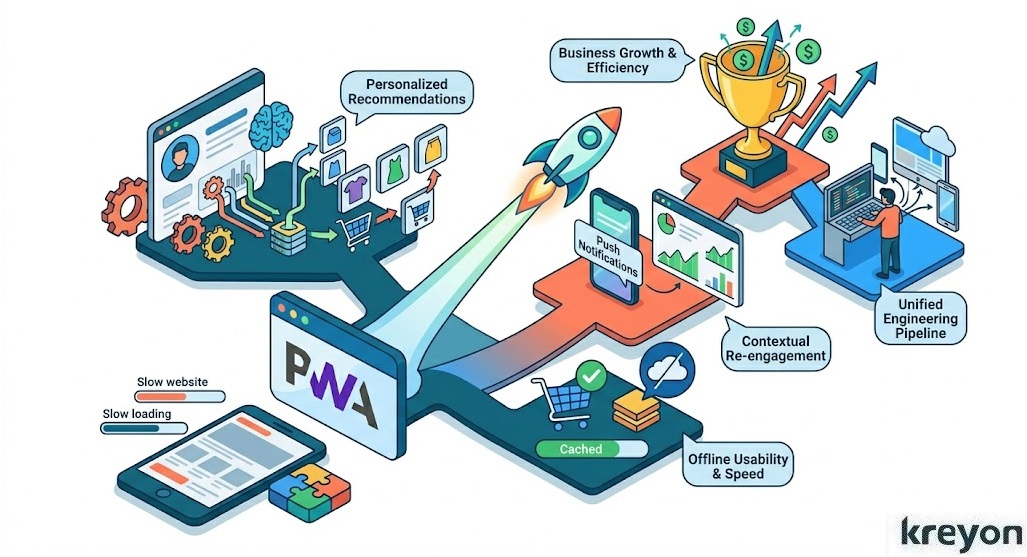
For the modern enterprise, the promise of digital personalization has long felt like an elusive mirage. We have more consumer data than ever before, yet our delivery mechanisms remain fundamentally broken.
In a world where attention is scarce and expectations are sky-high, Progressive Web Apps deliver something far more valuable than speed alone: relevance.
At their core, Progressive Web Apps (PWAs) are not just a technical upgrade. They represent a shift in how companies think about customer experience. Instead of forcing users into rigid digital journeys, PWAs adapt to them, quietly, intelligently, and at scale.
Consider the classic digital dilemma: a brand designs a brilliant, hyper-personalized recommendation engine, only to deploy it on a mobile web architecture that takes five seconds to load. By the time the tailored content renders, the consumer has already abandoned the tab.
To bypass this, companies have historically forced users toward native apps. But that strategy hits a different wall—app store fatigue. Consumers are increasingly reluctant to download a heavy, data-hungry native application just to complete a transaction. PWAs solve this problem.
This friction represents a critical revenue leak. Forward-thinking organizations are realizing that Progressive Web Apps deliver the exact fluid, frictionless orchestration required to meet modern consumer expectations.
PWAs bypass the friction of the app store while preserving the speed, offline capability, and deeply personalized engagement of a native application.
Progressive Web Apps Deliver Seamless Experiences Across Every Device
So the real question isn’t whether PWAs are better than traditional websites or apps. It’s this: how do they enable personalization that actually feels personal?
One of the biggest frustrations in digital experiences is inconsistency. A customer might browse on mobile during their commute, switch to a laptop at work, and revisit on a tablet at home, only to find three different experiences waiting for them.
This is where Progressive Web Apps deliver a major advantage. Built on modern web technologies, PWAs behave like native apps but run directly in a browser. That means no app store friction, no version mismatches, and no broken experiences across devices.
More importantly, they load quickly, even on unstable networks, and can function offline or in low-connectivity environments. Imagine a retail app that still lets a customer browse products in a subway tunnel or a travel app that keeps itineraries accessible mid-flight. That’s not just convenience; it’s continuity.
Progressive Web Apps Deliver Personalization at Scale Through Data Intelligence
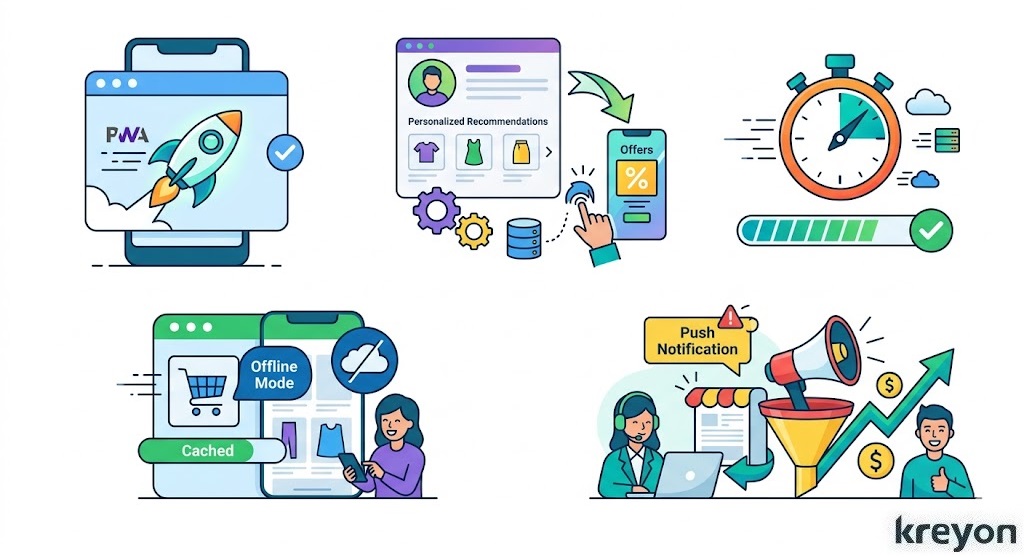
Personalization is no longer about inserting a customer’s first name into an email. It’s about understanding intent in real time.
Progressive Web Apps deliver personalization by continuously learning from user behavior, clicks, dwell time, browsing paths, and engagement patterns. This data is then used to dynamically adjust content, recommendations, and user flows.
For example:
- An e-commerce PWA can prioritize product categories based on browsing history.
- A media platform can surface articles aligned with reading habits.
- A travel service can highlight destinations similar to past searches.
What makes this powerful is scale. Unlike traditional apps that require heavy backend integration or separate platform builds, PWAs centralize data-driven personalization in a single codebase that works everywhere.
Progressive Web Apps Deliver Engagement Through Intelligent Re-Interaction
Getting a user to your platform once is hard. Getting them to return is harder.
This is where push notifications become a strategic tool rather than a nuisance. Progressive Web Apps deliver timely, contextual engagement through browser-based notifications that feel less intrusive than traditional app alerts.
But the key is relevance. The best-performing PWAs don’t just send updates, they send signals that matter:
- A price drop on a previously viewed product
- A reminder about an unfinished booking
- Breaking news aligned with user interests
This turns engagement into a dialogue rather than a broadcast. Instead of shouting at users, PWAs whisper the right message at the right moment.
Progressive Web Apps Deliver Cost Efficiency Without Sacrificing Experience
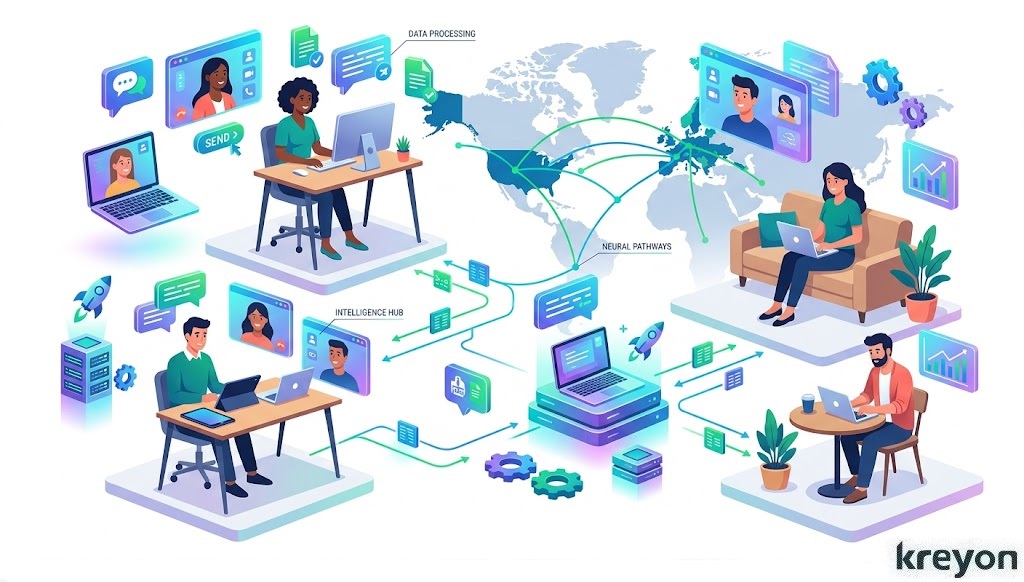
Traditionally, building a digital ecosystem meant maintaining separate native apps for iOS, Android, and the web. Each came with its own codebase, development cycle, and maintenance cost.
PWAs simplify this dramatically.
Because Progressive Web Apps deliver a unified experience across platforms, organizations can reduce duplication in engineering efforts while accelerating deployment cycles. Updates happen instantly—no app store approvals required.
For businesses, this translates into:
- Lower development costs
- Faster iteration cycles
- Easier experimentation with features
- Reduced dependency on platform-specific teams
But cost efficiency is only part of the equation. The real value lies in agility. Companies can respond to customer needs in real time rather than waiting weeks or months for updates to propagate through app ecosystems.
Re-engaging the Consumer: Contextual Push Notifications
The modern consumer’s attention span is a highly fragmented commodity. Once a user navigates away from a traditional website, that touchpoint is effectively lost.
Brand spends more capital on retargeting ads or email campaigns. Native apps solved this via push notifications, but required that initial, high-friction app store download.
PWAs bridge this gap beautifully. By utilizing web push notifications directly through the browser, Progressive Web Apps deliver a direct, unmediated communication channel to consumers who have merely visited a website.
[Traditional Web] -----> Lost Connection Upon Tab Close -----> Costly Ad Retargeting
[Native App]      -----> High-Friction App Store Download  -----> Low Opt-in Rates
[Enterprise PWA]  -----> Instant Browser Opt-in            -----> Real-Time Contextual Push
This capability allows marketing suites to deploy hyper-personalized re-engagement strategies in real time:
-
Geo-Targeted Promotions: Alerting a user to a personalized, in-store offer when they are physically near a brick-and-mortar location.
-
Behavioral Triggers: Automatically sending a tailored incentive if a user spends time evaluating a specific service tier or leaves items idling in a digital cart.
-
Predictive Restocking Alerts: Leveraging machine learning models to remind a B2B buyer to restock inventory based on historical purchasing intervals.
Crucially, this is achieved without forcing the user to give up phone storage space or manage app updates, yielding significantly higher opt-in rates than native counterparts.
Progressive Web Apps Deliver Real Business Outcomes Across Industries
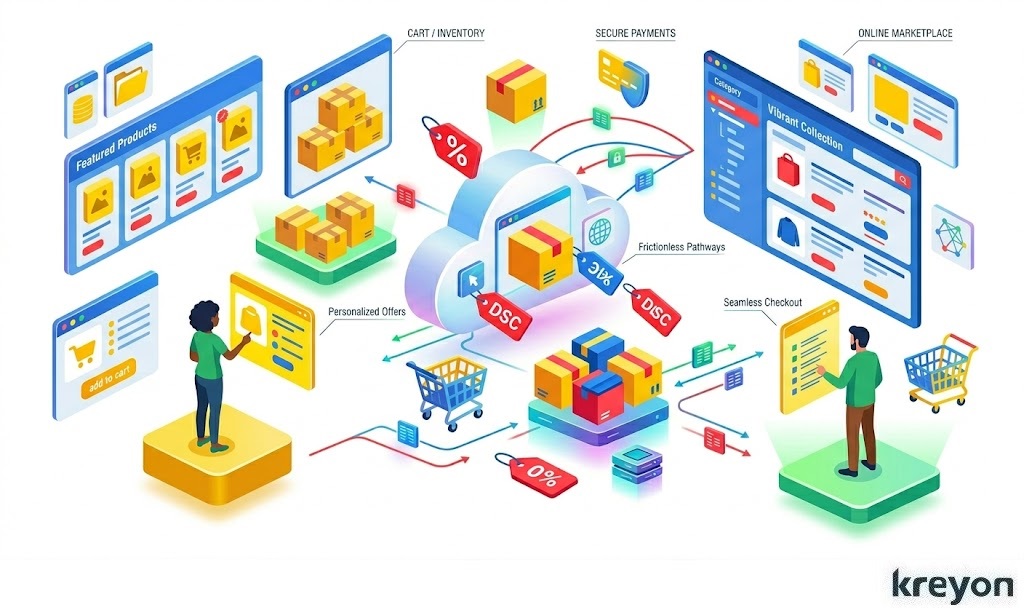
From retail to media to travel, organizations are increasingly adopting PWAs not as a trend, but as infrastructure.
Retailers use them to reduce cart abandonment by improving load speed and checkout flow. Media companies leverage them to increase reading time and repeat visits. Travel platforms rely on them to provide seamless booking experiences across devices.
In each case, Progressive Web Apps deliver measurable improvements in:
- Conversion rates
- User retention
- Page load performance
- Engagement depth
What’s interesting is not just adoption, but dependency. PWAs are becoming the default digital layer for companies that prioritize customer experience as a competitive advantage.
The strategic argument for PWAs becomes undeniable when we look at the hard metrics of early adopters. Global brands across retail, travel, and media have discovered that Progressive Web Apps deliver an immediate, positive impact on key performance indicators.
| Enterprise Organization | Primary Core Metric Improved | Strategic Business Outcome |
| Alibaba | Conversion Rate | Saw a 76% increase in total conversions across browsers after pivoting to a PWA framework. |
| Hulu | User Retention | Replaced its legacy desktop experience with a PWA, yielding a 27% jump in return visits. |
| Twitter (X) | Data Efficiency | Twitter Lite cut data consumption by 70%, driving a 65% increase in pages per session. |
| Nikkei | Operational Speed | The media giant achieved 2x faster load times, resulting in a 58% increase in conversions. |
Progressive Web Apps Deliver, But Strategy Still Matters
Technology alone doesn’t guarantee transformation. Even the most advanced PWA can fail if the strategy behind it is weak.
Successful implementation requires three critical elements:
- Performance optimization – ensuring fast load times and smooth interactions
- UX clarity – designing intuitive, frictionless journeys
- Data integration – connecting behavioral insights across systems
Without these, personalization becomes noise rather than value.
In other words, Progressive Web Apps deliver capability, but it’s the organization that must deliver intent.
Conclusion: The Future of Customer Experience Is Adaptive
We are moving away from static digital experiences toward adaptive ecosystems that evolve with the user. Progressive Web Apps sit at the center of this shift.
They are not just faster websites or cheaper apps. They are experience frameworks, designed to scale personalization without losing humanity.
When done right, Progressive Web Apps deliver something rare in digital business: experiences that feel both efficient and personal at the same time.
The opportunity now is not to ask whether to adopt PWAs, but how to design them so they truly serve the customer.
Kreyon Systems PWA development is tailored for maximum scalability & conversions to improve your digital presence & delivering seamless performance. For queries, please contact us.