
A Comprehensive Guide to Implementing CRM for Service Business
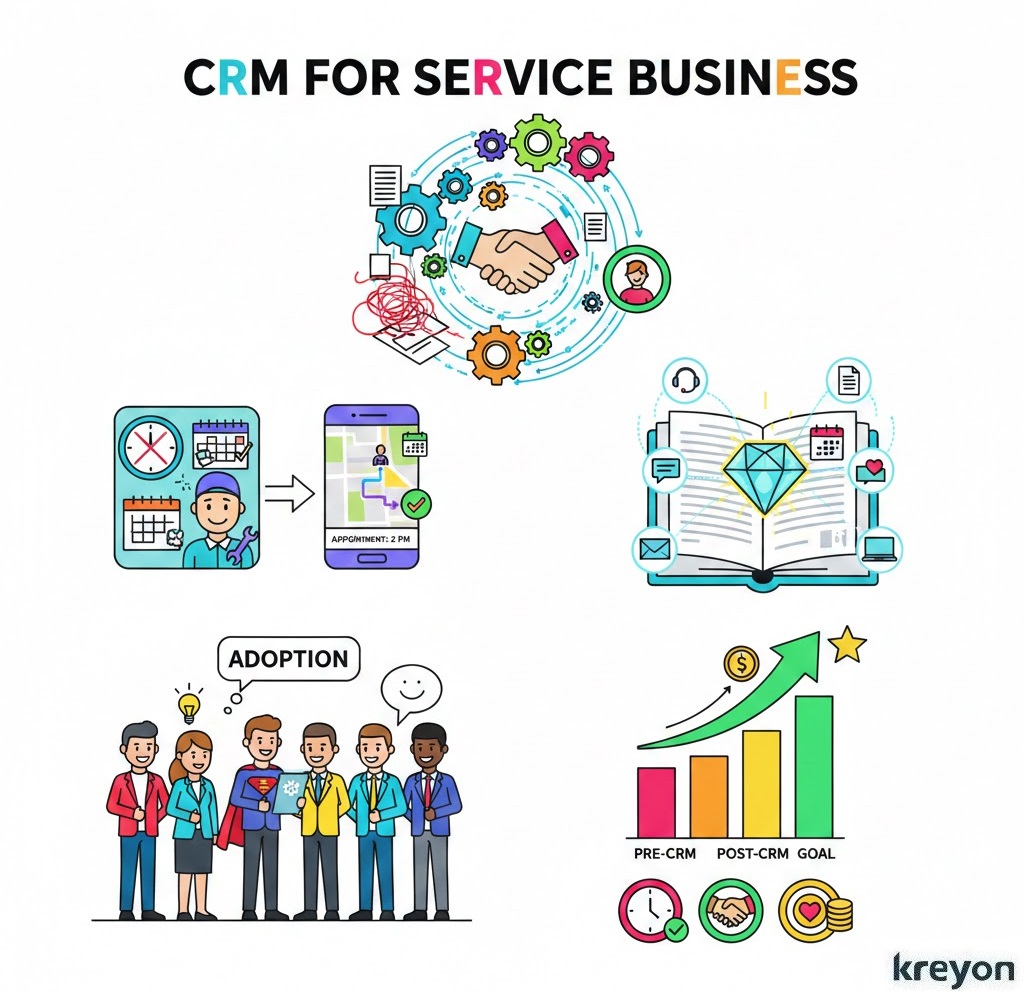
CRM for Service Business is a growth lever, not just a tool. At Kreyon Systems, we’ve worked with service-driven organizations that all share one common challenge: growth begins to stall not because demand disappears, but because systems can’t keep up.
Leads sit unattended. Service tickets get delayed. Customer histories live in inboxes. Sales and delivery teams operate in silos. And despite everyone working hard, revenue feels unpredictable.
This is where CRM for service business becomes transformative.
A CRM system isn’t just software you install, it’s the operational engine that aligns sales, service, and strategy. When implemented correctly, it creates clarity where there was confusion, consistency where there was friction, and measurable growth where there was guesswork.
For service businesses, from consulting and IT services to healthcare, logistics, and professional firms, CRM is no longer optional. It’s foundational.
What CRM for Service Business Really Means in Practice
Many companies think CRM is just about managing contacts. That’s a narrow view.
For a service business, CRM is about managing relationships across the entire lifecycle:
-
From first inquiry to signed contract
-
From onboarding to delivery
-
From support requests to renewals
-
From one-time engagement to long-term partnership
At Kreyon Systems, we view CRM as a relationship intelligence platform, one that centralizes data, automates workflows, and provides actionable insights.
Imagine this scenario:
A prospect fills out a form on your website. The CRM captures it instantly.
It assigns the lead to the right sales rep.
It schedules follow-up reminders automatically.
Once converted, the system transitions the account into service delivery workflows.
Every interaction is logged.
Performance metrics update in real time.
Nothing falls through the cracks.
That’s not automation for automation’s sake. That’s controlled, scalable growth.
Why Service Businesses Struggle Without CRM
Through our consulting engagements, we often see three recurring issues:
1. Fragmented Customer Information
Customer data exists in spreadsheets, email threads, and disconnected tools. Teams waste time searching for information instead of serving clients.
2. Inconsistent Follow-Ups
Without structured lead management, potential deals go cold. Service tickets get delayed. Customer experience becomes unpredictable.
3. Limited Visibility into Performance
Leaders lack real-time data. Decisions are reactive instead of strategic.
CRM for service business addresses all three simultaneously.
The Tangible Business Impact of CRM for Service Companies
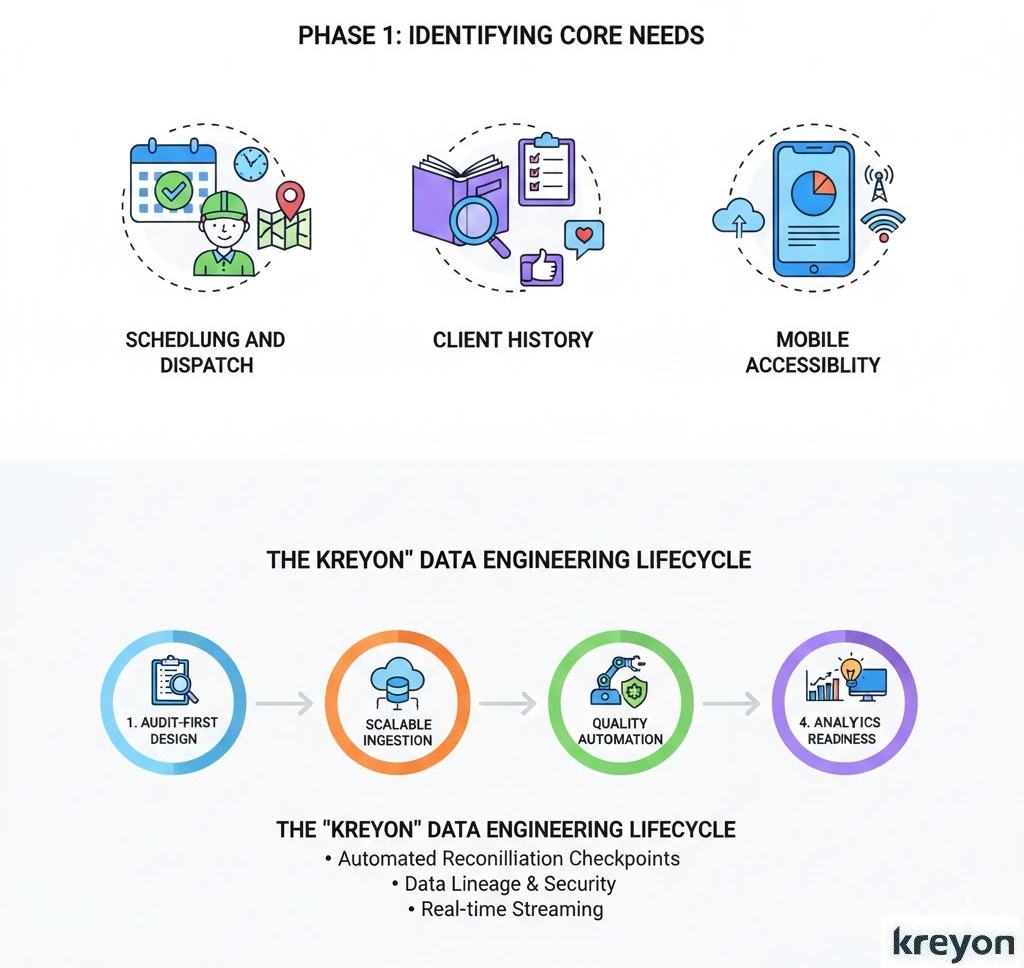
1. Higher Lead Conversion Rates
When every lead is tracked, nurtured, and followed up systematically, conversion rates improve naturally. CRM enforces discipline without micromanagement.
At Kreyon Systems, we’ve seen service businesses increase qualified lead conversions simply by structuring their pipeline stages clearly within CRM.
2. Faster Service Resolution Times
A centralized ticketing and tracking system means no delays caused by miscommunication. Service requests move through defined workflows with accountability at each stage.
Speed builds trust. Trust builds retention.
3. Improved Revenue Predictability
CRM dashboards provide pipeline visibility and forecasting capabilities. Leaders can answer critical questions:
-
What’s our projected revenue this quarter?
-
Where are deals getting stuck?
-
Which services generate the highest margins?
Predictability reduces stress and improves strategic planning.
4. Operational Efficiency Through Automation
Routine tasks, reminders, follow-ups, reporting are automated. That frees up your team’s cognitive bandwidth.
Instead of chasing information, your people focus on building relationships.
Implementing CRM for Service Business: The Kreyon Systems Approach
CRM success doesn’t happen by accident. It requires strategy, alignment, and execution.
Here’s how we guide organizations:
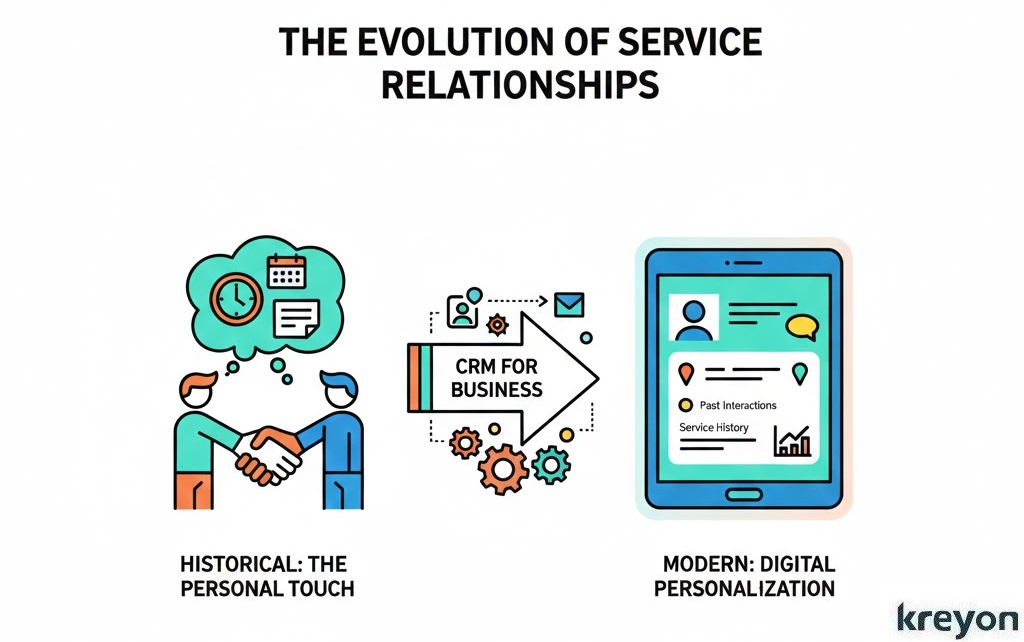
Step 1: Define Revenue and Service Objectives
Before selecting a CRM platform, we clarify goals:
-
Increase lead generation?
-
Reduce service response time?
-
Improve customer retention?
-
Enhance cross-selling opportunities?
Technology should support business strategy, not dictate it.
Step 2: Map the Customer Lifecycle
We work with leadership teams to document the complete customer journey.
Where do delays happen?
Where is communication inconsistent?
Where does data get lost?
The CRM configuration mirrors this journey, ensuring seamless transitions between sales, onboarding, and service delivery.
Step 3: Select and Customize the Right CRM Platform
Different service businesses require different capabilities.
We evaluate factors such as:
-
Workflow automation depth
-
Integration with existing tools
-
Scalability
-
Reporting and analytics capabilities
-
User adoption experience
The goal isn’t complexity. It’s clarity and usability.
Step 4: Clean, Structure, and Migrate Data
A CRM is only as powerful as the data inside it.
We prioritize data hygiene, eliminating duplicates, standardizing fields, and ensuring clean migration. This step is often underestimated but critical for long-term ROI.
Step 5: Align Teams and Drive Adoption
CRM implementation fails when treated as an IT project.
It succeeds when treated as a business transformation.
We conduct role-based training, align incentives, and demonstrate quick wins so teams see value immediately.
Best Practices for Implementing CRM
Standardize Before You Automate
If your process is unclear, automation will amplify confusion.
We help clients document and refine workflows before building automation rules.
Use Data to Lead, Not Just to Report
CRM dashboards should guide decisions, not just generate reports.
For example:
-
Identify service delays and reallocate resources.
-
Analyze lead sources and double down on high-performing channels.
-
Track customer churn signals early.
Data becomes strategy.
Integrate Your Technology Stack
CRM should connect with:
-
Marketing automation tools
-
Accounting systems
-
Communication platforms
-
Project management tools
Integrated systems eliminate duplication and improve visibility.
Focus on Long-Term Relationship Value
CRM for service business isn’t about closing a deal once. It’s about nurturing accounts over years.
Segment customers. Track renewal cycles. Identify upsell opportunities. Use historical data to personalize communication.
Service businesses thrive on lifetime value, CRM helps maximize it.
Common Challenges And How We Address Them
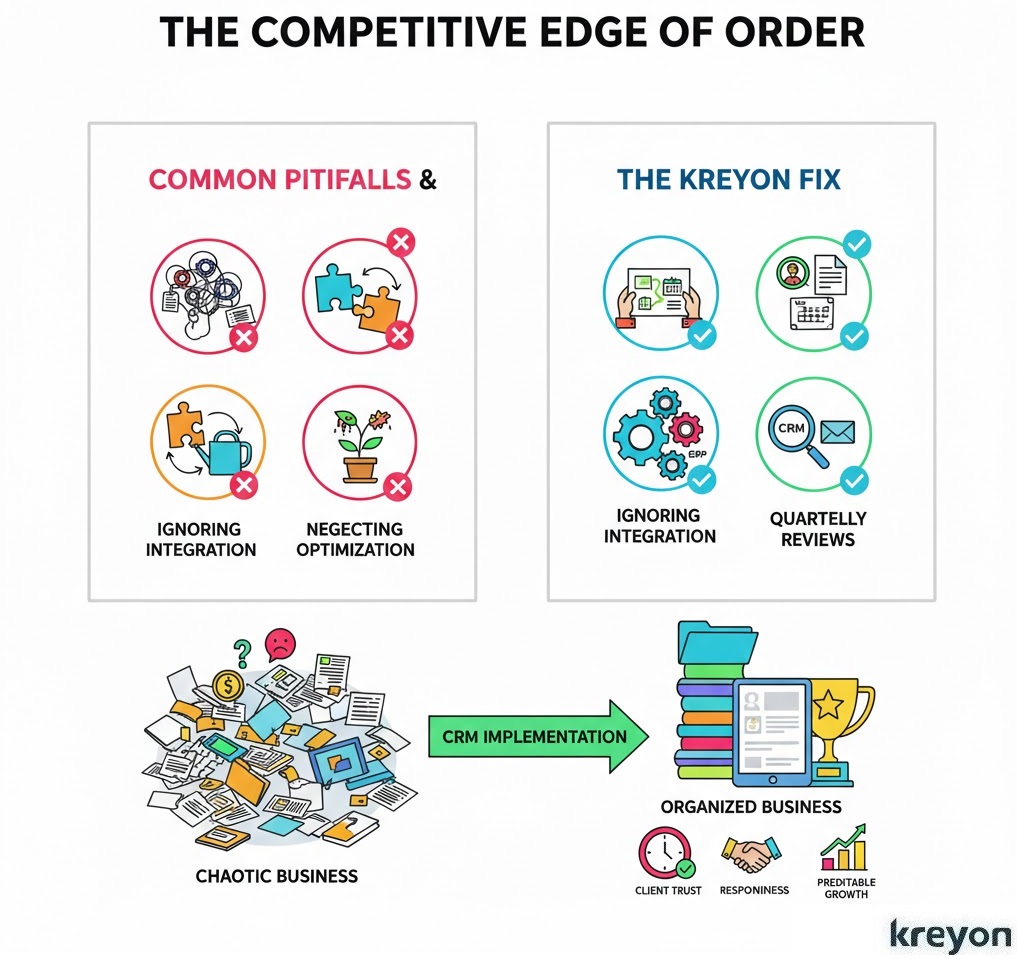
Resistance to Change
We position CRM as an enabler, not a monitor. When teams see how it reduces workload, adoption increases.
Data Overload
We focus on essential metrics first. Expansion happens gradually.
Tracking Vanity Metrics
Instead of surface-level numbers, we emphasize:
-
Customer retention rate
-
Service turnaround time
-
Pipeline velocity
-
Revenue per client
These are the metrics that drive growth.
The Future: Intelligent CRM for Service Businesses
CRM platforms are evolving rapidly. Artificial intelligence now enables:
-
Predictive lead scoring
-
Churn forecasting
-
Automated next-best-action recommendations
-
Smart workflow optimization
For forward-thinking service companies, CRM becomes more than a database, it becomes a competitive advantage.
At Kreyon Systems, we see CRM not as a destination, but as a continuously optimized growth engine.
Final Thoughts: CRM as a Strategic Revenue Accelerator
For service businesses aiming to scale, CRM is not an administrative upgrade. It’s a strategic commitment to operational excellence.
When implemented correctly, CRM:
-
Aligns teams
-
Strengthens customer relationships
-
Increases conversion rates
-
Improves service delivery
-
Drives predictable revenue growth
At Kreyon Systems, we help organizations move from fragmented systems to integrated growth platforms.
The real question isn’t whether your business needs CRM.
It’s whether your current systems are helping you grow or quietly limiting you.
Let’s Build a Scalable Growth System
Exploring how CRM can increase lead generation, improve service efficiency, & drive revenue growth? Kreyon Systems can help you design, implement, & optimize a CRM solution tailored to your operations. For queries, please contact us.