
How to Turn Your Existing Business Data Into Revenue Using AI
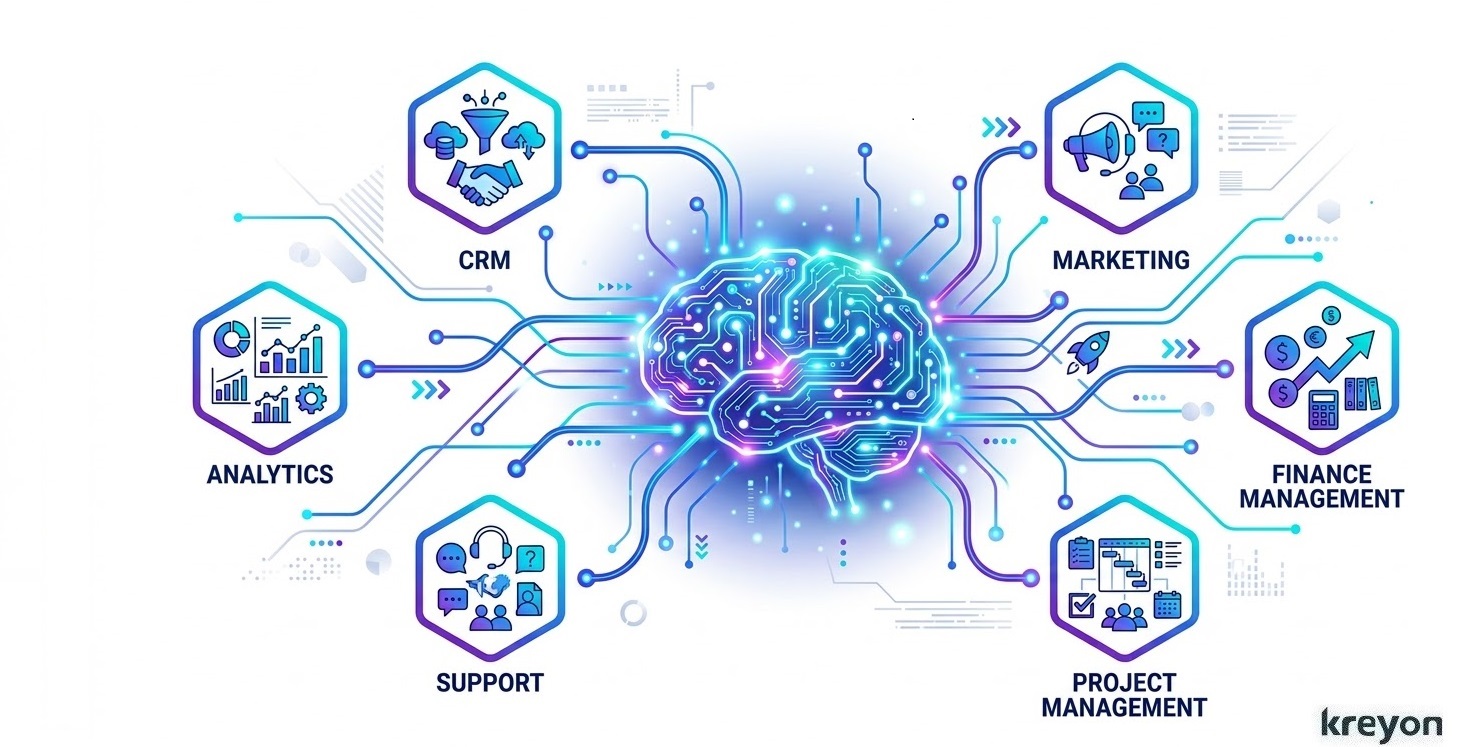
Business data is the untapped Asset on Your Balance Sheet. Most companies do not suffer from a lack of data. They suffer from a lack of usable intelligence.
Every transaction, customer interaction, support ticket, and operational workflow generates data. Over time, this accumulates into a vast, fragmented asset spread across CRMs, ERPs, marketing platforms, & internal tools.
Despite significant investments in data infrastructure, a large portion of this information remains underutilized.
For business leaders, this creates a paradox: More data, but not necessarily better decisions.
The consequence is not just inefficiency, it is lost revenue potential.
Organizations that successfully operationalize their data using AI are not simply becoming more efficient. They are unlocking new revenue streams, improving margins, and gaining structural competitive advantages.
From Data Abundance to Revenue Scarcity
Why does so much data fail to translate into business value?
The issue lies in how data is treated within most organizations. It is often:
-
Siloed across departments and tools
-
Reactive, used for reporting rather than prediction
-
Incomplete or inconsistent, limiting its reliability
-
Disconnected from decision-making workflows
Consider a typical mid-sized company:
-
Marketing generates leads but lacks visibility into downstream conversions
-
Sales teams rely on intuition rather than predictive insights
-
Customer support resolves issues without feeding insights back into product or growth teams
Each function operates with partial visibility. The result is suboptimal decisions at every level.
This fragmentation creates what can be described as a “data-to-revenue gap” the distance between the data a company has and the revenue it could generate if that data were fully leveraged.
Why Many AI Initiatives Fail to Deliver ROI

Despite growing enthusiasm around AI, many organizations struggle to achieve meaningful returns on their investments.
The primary reason is a misalignment between technology adoption and business outcomes.
Common pitfalls include:
1. Tool-First Thinking
Organizations often begin with the question: “Which AI platform should we adopt?”
Instead, they should ask: “Which business problem are we solving?”
2. Lack of Data Readiness
AI systems are only as effective as the data they rely on. Poor data quality, inconsistent formats, and missing context lead to unreliable outputs.
3. Absence of Workflow Integration
Even accurate insights have limited value if they are not embedded into day-to-day operations. AI must influence decisions in real time, not sit in dashboards.
4. Undefined Success Metrics
Without clear KPIs tied to revenue, cost savings, or efficiency gains, it becomes difficult to measure impact or justify continued investment.
In essence, AI does not fail because of technological limitations. It fails because it is not operationalized effectively.
A Framework for Turning Data Into Revenue
Organizations that succeed in monetizing their data tend to follow a structured approach. This can be distilled into four key stages:
1. Data Consolidation
Bringing together disparate data sources into a unified, accessible layer.
2. Data Enrichment
Cleaning, standardizing, and enhancing data to improve its quality and usability.
3. Intelligence Layer
Applying AI models to generate predictions, recommendations, and insights.
4. Workflow Activation
Embedding these insights directly into business processes to drive action.
The final stage is workflow activation where most of the value is realized. Without it, even the most sophisticated models remain academic exercises.
Five High-Impact Revenue Levers Enabled by AI

When applied strategically, AI can transform existing data into measurable financial outcomes. The following use cases represent some of the most effective entry points.
1. Predictive Sales Intelligence
Traditional sales processes are often reactive. Teams prioritize leads based on limited signals, resulting in inefficient allocation of time and effort.
AI changes this dynamic by analyzing historical data to identify patterns associated with successful conversions. These patterns may include:
-
Engagement behavior (email opens, website visits, product usage)
-
Firmographic attributes (industry, company size)
-
Buying signals (pricing page interactions, demo requests)
By scoring leads based on their likelihood to convert, organizations can:
-
Focus sales efforts on high-probability opportunities
-
Reduce sales cycle length
-
Increase conversion rates
This shift from intuition-driven to data-driven sales can have a direct and measurable impact on revenue.
2. Hyper-Personalized Marketing
Generic marketing campaigns are increasingly ineffective in a landscape defined by information overload.
AI enables granular segmentation and real-time personalization by leveraging customer data across multiple touchpoints. This allows organizations to tailor:
-
Messaging
-
Timing
-
Channel selection
-
Offers and pricing
For example, two prospects visiting the same website may receive entirely different experiences based on their behavior and profile.
The result is:
-
Higher engagement rates
-
Improved customer acquisition efficiency
-
Increased lifetime value
3. Intelligent Process Automation
Many operational workflows remain heavily manual, even in digitally mature organizations.
Examples include:
-
Data entry and reconciliation
-
Report generation
-
Routine customer communications
-
Internal approvals
AI-driven automation can streamline these processes by:
-
Extracting and processing data automatically
-
Triggering actions based on predefined conditions
-
Reducing human intervention in repetitive tasks
Beyond cost savings, the strategic benefit lies in freeing human capital to focus on higher-value activities such as strategy, innovation, and relationship building.
4. Revenue-Driven Customer Support
Customer support is traditionally viewed as a cost center. However, when integrated with AI, it can become a driver of both retention and revenue.
AI systems can:
-
Predict potential issues before they escalate
-
Provide instant, accurate responses to common queries
-
Recommend relevant products or upgrades during interactions
By leveraging historical support data, organizations can also identify:
-
Common friction points
-
Product improvement opportunities
-
Early indicators of churn
Transforming support into a proactive, insight-driven function leads to:
-
Higher customer satisfaction
-
Reduced churn
-
Increased upsell and cross-sell opportunities
5. Strategic Decision Intelligence
At the executive level, decision-making often relies on a combination of reports, experience, and intuition.
AI enhances this process by providing:
-
Predictive forecasts
-
Scenario analysis
-
Root-cause identification
For instance, instead of asking “What happened last quarter?”, leaders can ask:
-
“What is likely to happen next quarter?”
-
“What factors are driving performance?”
-
“What actions will produce the best outcome?”
This shift from retrospective to predictive decision-making enables organizations to act with greater speed and confidence.
Implementation Challenges: Where Organizations Struggle
While the opportunities are significant, execution remains complex.
Common challenges include:
-
System Integration: Connecting legacy systems with modern AI infrastructure
-
Data Governance: Ensuring accuracy, consistency, and compliance
-
Change Management: Aligning teams and processes with new ways of working
-
Scalability: Moving from pilot projects to organization-wide adoption
These challenges are not purely technical. They require a combination of strategic clarity, operational discipline, and cross-functional alignment.
A Pragmatic Approach to Getting Started
Rather than attempting large-scale transformation initiatives, successful organizations adopt a more focused approach.
Start with a High-Impact Use Case
Identify a specific problem with clear financial implications, for example, improving lead conversion rates or reducing churn.
Define Measurable Outcomes
Establish KPIs that directly link to business value, such as revenue growth, cost reduction, or productivity gains.
Build and Validate Quickly
Develop a targeted solution, test it in a controlled environment, and measure results.
Scale Strategically
Once proven, expand the solution across similar workflows or departments.
This iterative approach minimizes risk while maximizing learning and impact.
The Strategic Imperative
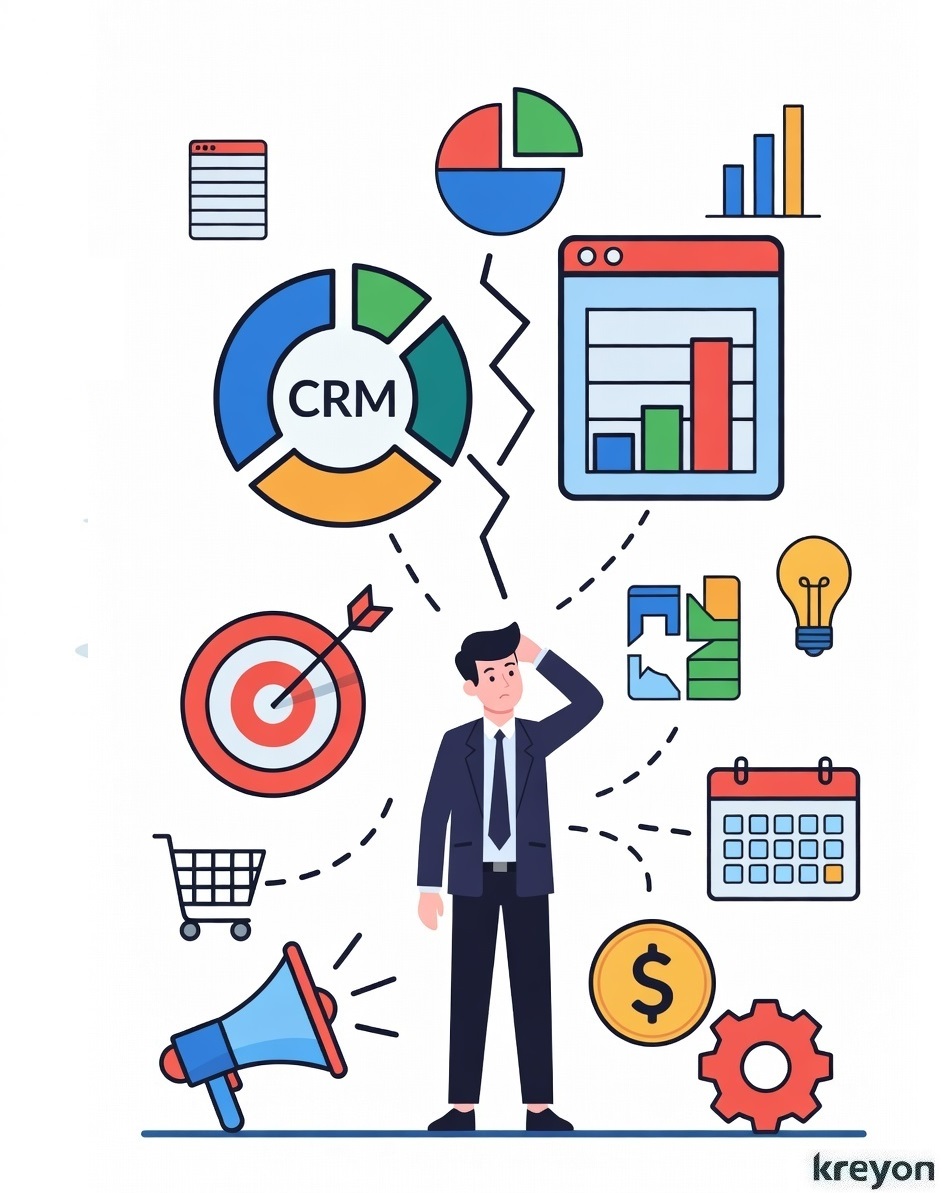
The ability to convert data into revenue is rapidly becoming a defining characteristic of high-performing organizations.
Companies that succeed in this area share several traits:
-
They treat data as a core business asset
-
They prioritize outcomes over tools
-
They embed intelligence into everyday workflows
-
They continuously refine and scale their capabilities
In contrast, organizations that fail to act risk falling behind. Not due to a lack of data, but due to an inability to use it effectively.
Conclusion: From Potential to Performance
The question is no longer whether companies should invest in AI. That decision has largely been made.
The real question is:
How effectively can you translate your existing data into measurable business outcomes?
The opportunity is substantial. The data already exists. The technology is increasingly accessible.
What remains is execution.
Organizations that bridge the gap between data and action will not only improve efficiency, they will unlock new pathways to growth, innovation, & competitive advantage.
A Practical Next Step
For many companies, the challenge is not recognizing the opportunity, but identifying where to begin.
A focused assessment of your current data landscape, workflows, and revenue drivers can reveal:
-
High-impact use cases
-
Quick wins with measurable ROI
-
Structural gaps limiting performance
A structured data and AI opportunity audit can serve as a starting point, providing clarity on where your existing data can generate the greatest value.
Because in today’s environment, competitive advantage does not come from having more data. It comes from using it better.
Kreyon Systems builds custom data and AI solutions that drive real business results, practical, scalable, and outcome-focused, not experimental. For queries, please contact us.