
The 30-Day Data Audit: Find the Data Gaps Costing Your Business Sales
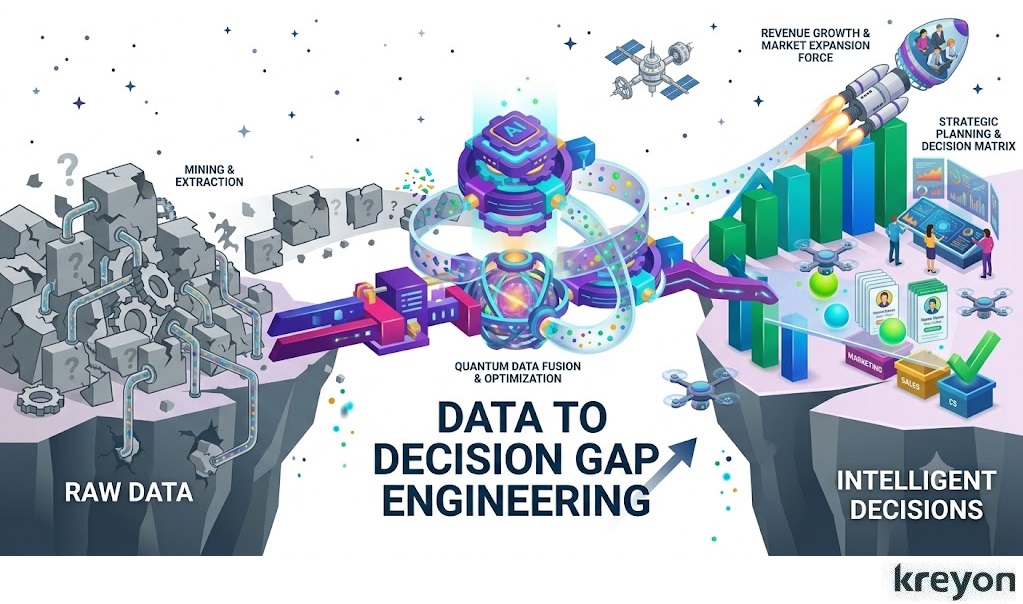
Your business probably has more data than it knows what to do with.
There is data in the CRM. More in the ERP. Marketing has its own numbers, customer support has another view of the customer, and somewhere along the way, someone has built a spreadsheet that has quietly become “the real source of truth.”
Then a sales leader asks a deceptively simple question:
“Why are we missing our revenue target?”
Suddenly, all that data doesn’t feel quite so useful.
The problem isn’t necessarily that the business lacks information. The problem is that the information may be incomplete, duplicated, disconnected, outdated, or simply difficult to trust.
This is where a Data Audit becomes valuable.
A Data Audit is more than a technical exercise to find duplicate records or clean up databases. Done properly, it helps a business understand whether its data is accurate, accessible, connected, and useful enough to support important commercial decisions.
For sales-driven organizations, that distinction matters. A missing customer field can affect a sales conversation. An outdated account record can derail an outreach campaign. A disconnected CRM and ERP can hide an opportunity that was sitting in front of the business all along.
The question isn’t whether your organization has data.
The question is whether your data is helping you sell.
What Is a Data Audit and Why Should Sales Leaders Care?
At its simplest, a Data Audit is a structured assessment of the information an organization collects, stores, moves, and uses.
But the most valuable audits go beyond the technology.
They connect the condition of the data to the decisions the business is trying to make.
Can the sales team trust the pipeline numbers? Can marketing identify which campaigns are actually generating qualified opportunities? Can account managers see the full relationship with a customer? Can executives distinguish a genuine revenue trend from a reporting error?
These questions turn a Data Audit from an IT exercise into a business exercise.
Organizations often invest heavily in CRM platforms, analytics tools, cloud infrastructure, and AI applications. Yet those investments can deliver disappointing results when the underlying data is fragmented or unreliable.
IBM’s research on data quality has highlighted the business consequences of inaccurate or poor-quality data. The broader lesson is straightforward: technology can process information at extraordinary speed, but it cannot automatically make bad information good.
Better technology cannot compensate indefinitely for unreliable data.
The Hidden Connection Between Data Quality and Sales
Consider a B2B company with 50,000 contacts in its CRM.
On paper, that sounds like a healthy database.
But imagine that thousands of those records are duplicated. Some don’t contain current job titles. Lead sources aren’t consistently recorded. Customer accounts aren’t properly connected to their subsidiaries.
Sales representatives use different definitions for pipeline stages. Marketing and sales systems aren’t fully synchronized.
The company doesn’t necessarily have a lead-volume problem. It has a data problem.
And data problems have a habit of becoming revenue problems.
A salesperson who doesn’t have the right information may spend an hour researching an account that should have taken five minutes. A marketing team that cannot reliably connect campaigns to opportunities may continue investing in channels that aren’t producing results.
A sales manager working with inconsistent pipeline information may make a forecast based on numbers that look precise but aren’t particularly trustworthy.
None of these problems necessarily appear as a line item on the income statement.
They show up as friction.
And over time, that friction can become expensive.
The 30-Day Data Audit: From Data Inventory to Revenue Insight
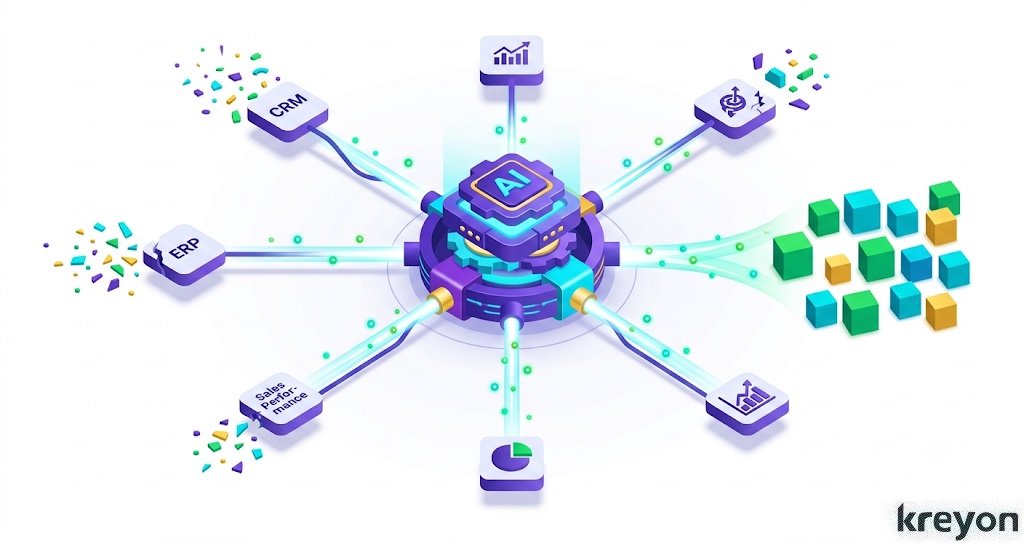
A meaningful Data Audit doesn’t need to become a six-month technology project.
For many organizations, a focused 30-day assessment can provide a surprisingly clear picture of where the biggest issues are and where they are worth fixing first.
The first few days should be spent understanding the organization’s data landscape.
Where does customer information live? Which systems influence sales? What information moves between marketing, sales, finance, operations, and customer support? Which reports do executives rely on when making revenue decisions?
This exercise often reveals something interesting.
The official architecture diagram and the way people actually use data are rarely identical.
A CRM may be the designated system of record, while the sales team maintains another spreadsheet. Marketing may have campaign information that never reaches the CRM. Finance may have the most accurate customer information, but sales may not have access to it.
The audit begins to reveal not just where data lives, but how the business actually works.
The Next Question: Can You Trust the Data?
Once the data landscape is understood, the next step is to examine its quality.
This is where concepts such as accuracy, completeness, consistency, timeliness, uniqueness, and validity become important.
But rather than treating these as technical metrics, consider their business implications.
If customer records are incomplete, how does that affect sales outreach?
If opportunities aren’t updated consistently, what does that do to forecasting?
If the same customer appears under three different names across different systems, how confidently can the organization calculate customer lifetime value?
If marketing cannot reliably identify where a lead originated, how does the company decide where to invest its next marketing dollar?
Suddenly, data quality isn’t an abstract technology concern.
It becomes a revenue conversation.
Finding the Data Gaps That Actually Matter
A Data Audit can uncover dozens or even hundreds of data issues.
The mistake is assuming that every issue deserves equal attention. It doesn’t.
The most useful approach is to connect each data gap to a business consequence.
Imagine discovering that a large percentage of customer records are missing industry information. That may be inconvenient, but perhaps it isn’t immediately damaging.
Now imagine discovering that sales opportunities aren’t consistently associated with the correct customer accounts.
That’s different. It could affect forecasting, account planning, revenue attribution, reporting, and customer analysis.
The important question becomes:
Which data gaps are preventing the business from making a decision it needs to make?
That question changes the entire audit.
Instead of producing a long list of technical defects, the organization begins developing a hierarchy of business priorities.
Some problems are annoying. Others are expensive.
The Data Audit should help leaders tell the difference.
Turning Data Problems Into Revenue Opportunities
This is where a Data Audit becomes particularly interesting for sales and executive teams.
A disconnected system may represent an integration opportunity.
A manual reporting process may point toward automation.
Incomplete customer information may indicate the need for better data governance.
Fragmented customer records may create the case for a Customer 360 initiative.
Poorly structured historical data may become a barrier to an AI or predictive analytics project.
In other words, a data problem isn’t always something to fix and forget.
Sometimes it is a signal pointing toward a larger business opportunity.
Consider a company that discovers its sales representatives spend several hours every week manually compiling customer information before account reviews.
The immediate problem appears to be inefficient reporting.
But a deeper Data Audit might reveal that customer, sales, service, and transaction data exist in separate systems and aren’t connected.
The opportunity isn’t simply to automate the report. It is to create a unified view of the customer.
That’s a much bigger business improvement.
From Data Audit to Data Strategy
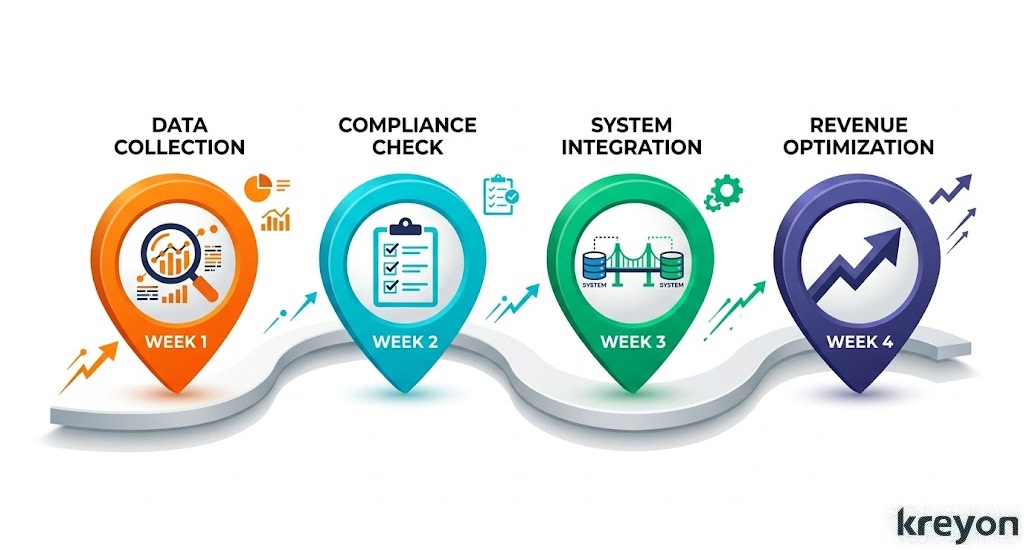
By the final week of the audit, the conversation should move beyond “What’s wrong with our data?”
The better question is:
“What should we do about it?”
This is where the audit should produce a practical roadmap.
The roadmap doesn’t need to recommend a dozen new platforms. In fact, sometimes the smartest recommendation is to get more value from the systems the company already owns.
A good roadmap distinguishes between immediate improvements and longer-term transformation.
Some issues can be addressed quickly through better validation rules, standardized definitions, duplicate removal, improved data ownership, or reporting changes.
Others may require deeper work involving CRM integration, data architecture, cloud modernization, analytics platforms, or AI readiness.
The important thing is sequencing. Not every data problem needs to be solved today.
The business needs to know which problems matter most, what they are likely to cost, and what should happen next.
Is Your Data Ready for AI?
There is another reason Data Audits have become increasingly relevant. Artificial intelligence has changed the conversation around business data.
Companies are asking how they can use AI for sales forecasting, customer segmentation, lead scoring, personalization, churn prediction, service automation, and knowledge management.
But before asking what AI can do, businesses should ask a more fundamental question:
Is our data ready for AI?
AI systems depend on usable information.
If customer records are fragmented, business definitions are inconsistent, critical information is trapped in disconnected systems, or historical data is unreliable, adding an AI layer won’t necessarily solve the problem.
It could amplify it.
This is why a Data Audit can be a valuable first step in an AI-readiness strategy.
It provides a clearer picture of what information exists, how reliable it is, where integration is needed, and which AI use cases are realistic.
The NIST AI Risk Management Framework is one useful reference for organizations thinking about responsible AI adoption and the risks associated with AI systems.
What Should You Have After 30 Days?
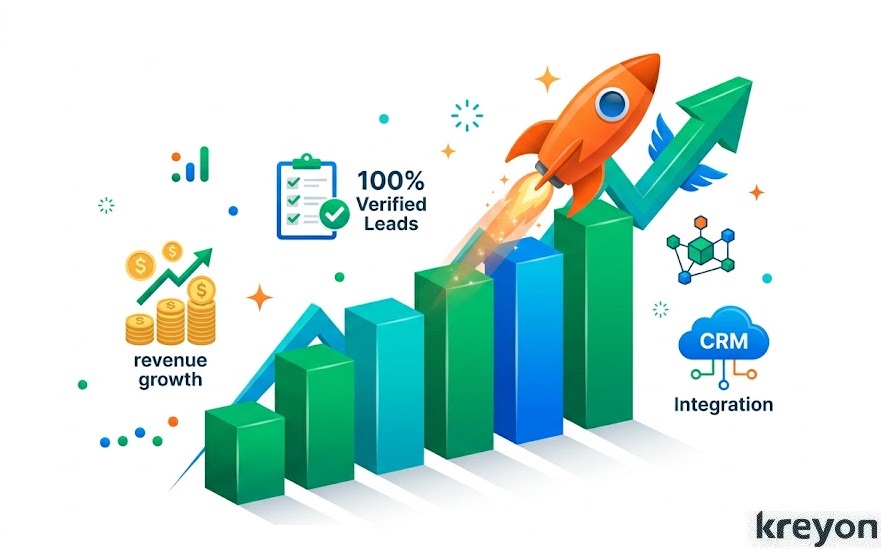
At the end of a meaningful Data Audit, executives shouldn’t be handed a giant technical document and told to figure it out.
They should have clarity.
They should know where their most important data lives, which gaps are affecting business performance, which problems deserve immediate attention, and what technology or process changes can address them.
More importantly, they should understand the relationship between data and revenue.
That might mean discovering that unreliable pipeline data is affecting forecasts.
It might mean identifying customer information trapped across multiple systems.
It might mean finding opportunities to automate reporting or improve account intelligence.
Or it might reveal that the organization isn’t ready for a planned AI initiative because the underlying data foundation needs work first.
The deliverable isn’t really the audit.
The deliverable is better decision-making.
The Real Value of a Data Audit
It’s easy to think of data quality as housekeeping.
Clean the records. Remove the duplicates. Standardize the fields. Move on.
But businesses don’t invest in data so they can have beautifully organized databases.
They invest in data because they want to make better decisions.
When sales leaders can trust their pipeline information, forecasting becomes more meaningful.
When marketers can connect campaigns to revenue, they can make smarter investment decisions.
When account teams have a complete picture of customers, they can identify expansion and retention opportunities.
And when executives trust the numbers in front of them, decisions become faster and more confident.
That is the real purpose of a Data Audit.
Not more data.
Better decisions from the data you already have.
Where Should Your Business Start?
Start with a simple question:
Where could bad, missing, or disconnected data be costing us sales today?
Don’t begin by buying another platform.
Don’t begin by launching another dashboard.
Begin by understanding what you already have.
A focused 30-day Data Audit can give leadership a clearer view of the data gaps affecting revenue, the systems creating those gaps, and the opportunities available to fix them.
The ultimate objective isn’t to make your organization more data-heavy.
It’s to make it more data-confident.
Because when the right information reaches the right person at the right time, data stops being a reporting problem.
It becomes a revenue advantage.
For organizations that need to move from assessment to execution, Kreyon Systems bridges the gap from data assessment, integration to AI automation & map business outcomes. For queries, please contact us.